Most arms don't get hurt on one bad pitch. They get hurt when a pitcher keeps throwing after his body is done.
Injuries tend to happen when fatigue sets in. Almost every rule I follow for my pitchers comes back to that one idea: keep them from throwing tired, and keep them from throwing hurt.
Here's exactly how I handle it.
My pitch count rules
These are the guidelines I hold my pitchers to in tournament play:
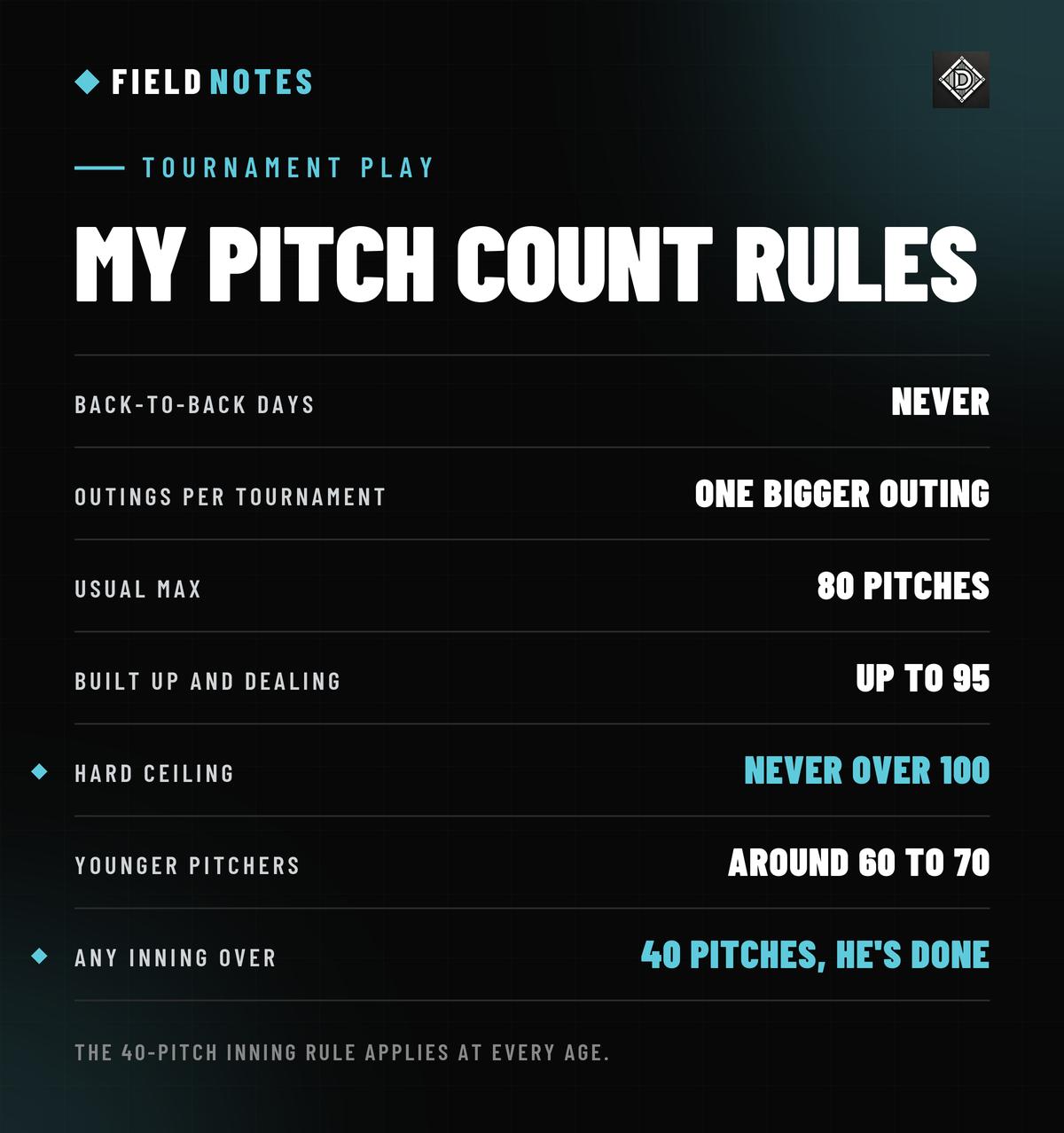
That last rule surprises some parents. A 40-pitch inning means a pitcher has been stuck on the mound, working hard, with no break. That's exactly where fatigue starts to show up, so that's where I take the ball.
How arms actually get hurt
In my experience, it comes down to players throwing through pain and fatigue.
When a pitcher is hurting or worn out, his body doesn't just throw worse. It starts throwing differently. It finds another way to get the ball to the plate, and that compensation puts stress on parts of the arm and body that aren't built to take it.
That's the real danger. The pain or fatigue is the warning, and the compensation that follows is what puts the player at risk.
How I manage workload
It's not complicated, but it takes discipline:
- Stick to the pitch count guidelines. Every outing, every tournament. They only work if they don't bend when a game gets close.
- Manage throwing volume in practice too. Game pitches aren't the only throws that count. What a pitcher does in practice adds to the same arm.
- Recover after throwing. Every pitcher I work with has a post-throwing recovery routine. I wrote about the tools and habits I use in A Simple Arm Care Routine You Can Do Anywhere.
The warning signs parents should watch for
You know your kid better than any coach does. Watch for:
- Loss of mobility in the hips, shoulder, or elbow. If he can't move the way he normally moves, something's off.
- Pain that follows him through the day. Soreness after a game is one thing. If the pain shows up at school, at home, and in everyday life, it's time to see a doctor.
Don't wait for it to go away on its own, and don't let him pitch through it.
What about pitching for two teams?
Honestly, it's not a very good idea.
It can work, but only if both coaches are in communication and the player doesn't get overused. If one coach doesn't know what the other one had him throw, nobody is really tracking his workload. Then the pitch count rules don't mean much.
The bottom line
Keep pitchers from throwing tired. Keep them from throwing through pain. Set firm limits and stick to them, even when the game is on the line.
A healthy arm is one that gets to keep pitching for years. If you want a coach who tracks this for your pitcher instead of leaving it to chance, here's what the program includes.